Weeps, flashing and mortar nets: why a masonry wall stays dry
A brick wall is not waterproof. It is designed to let water back out, and that only works if the detail is right.
September 15, 2026 · 4 min read
Water gets into a cavity wall. That is not a defect, it is how the assembly is designed. Rain drives through the joints, condensation forms on the back of the brick, and the cavity behind it is there to give all of that somewhere to go. The wall stays dry because the water is collected and sent back out, which means the parts that do the collecting and the sending are the parts worth getting right.
Flashing collects, weeps release
Flashing is the floor of the system. It sits at the base of the cavity and at every interruption, catches what runs down the back of the brick, and carries it outward. Weep vents are the door. Without them, flashing becomes a tray that fills up, and a full tray is worse than no tray at all because the water sits against the masonry instead of draining. The two are one detail and installing either without the other is a false economy.
Drip edge finishes the path. Where flashing exits the face of the wall, it needs to project and turn down so the water leaves the building rather than running back along the underside of the brick. A flashing that stops flush with the face sends water straight back into the wall below it.
Mortar nets keep the path open
The most common reason a correctly detailed wall still fails is mortar droppings. As the mason lays up, mortar squeezes out the back of the joint and falls into the cavity. It lands on the flashing, piles up against the weeps, and blocks the drainage before the wall is even finished. Mortar nets and grout screens sit in the cavity and hold those droppings above the flashing line, so the tray stays clear and the weeps keep working.
- Flashing: collects water at the base of the cavity and at interruptions
- Weep vents: let the collected water back out at the flashing line
- Drip edge: projects the exit so water leaves the face instead of tracking back
- Mortar nets and grout screens: keep droppings off the flashing and clear of the weeps
- Cavity wall insulation: rigid board that keeps the cavity a cavity
Ties, anchors and movement
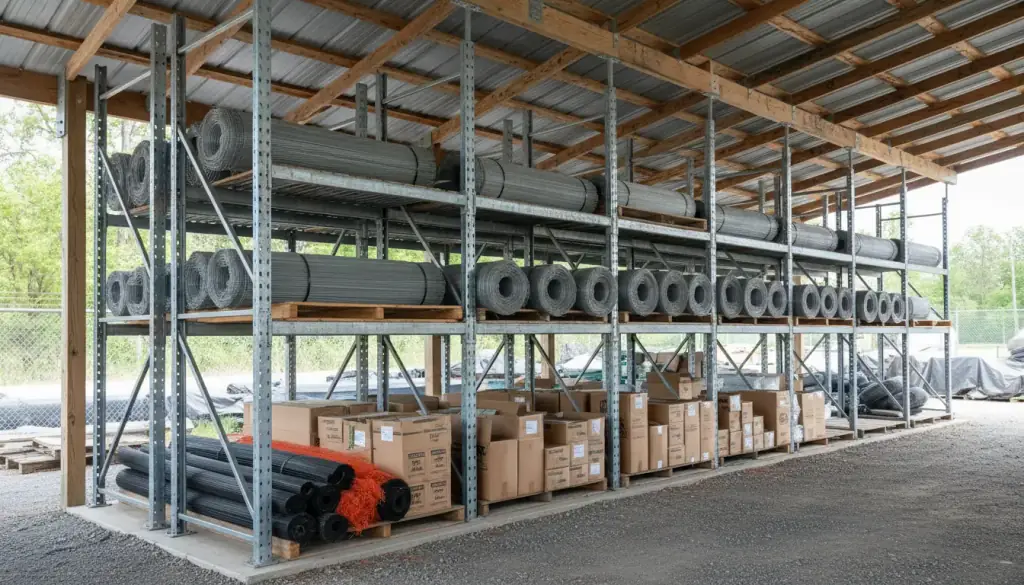
The two wythes of a cavity wall have to act together without being rigidly locked. Eye wire reinforcing mesh and anchors and straps do that work, holding the veneer back to the structure while allowing the small differential movement that temperature and moisture cause. Control joints give the wall a planned place to move. Leave them out and the wall will pick its own place, which is usually a corner or an opening.
Termination bars hold the top edge of a flashing or membrane tight against the backup so water cannot get behind it. It is a small part that fails quietly, because a flashing that has come loose at the top still looks installed from outside.
Cleaning, at the end and not before
New masonry cleaner takes off the mortar smear and the efflorescence that shows up in the first weeks. The timing matters more than the product. Clean too early and you pull mortar out of joints that have not cured. Follow the manufacturer direction on the container, test a small area first, and wet the wall down before and after so the cleaner does not soak into dry brick.
Block flash and the small parts
Block flash deserves its own mention because it solves a problem people often do not realise they have. In a single wythe block wall there is no cavity to drain, so water that gets through the face has to be caught inside the block itself and sent back out. Block flash sits in the cores and does that work. Leave it out of a block wall and the moisture has nowhere to go but through to the inside face, which is where it shows up as a stain six months later and gets blamed on the roof.
Cavity wall insulation is the other part worth thinking about early. Rigid board in the cavity has to leave a clear drainage path in front of it, because insulation that fills the cavity turns a drained wall into a solid one. Board thickness is an assembly decision, not a site decision, and it is worth confirming against the wall section before anyone starts cutting.
Stocked in Oklahoma City
We carry the full masonry detail rather than the three fastest moving items: wire reinforcing mesh in eye wire, anchors and straps, flashing, mortar nets, weep vents, control joints, termination bars, drip edge, cavity wall insulation, mortar grout screens, block flash and new masonry cleaner. It is all at 20 NE 30th Street, and delivery to an Oklahoma City job is usually same day or next day.
If you are detailing a wall and want to talk through the base flashing or a sill condition before you order, call the counter. We would rather help you get the detail right than sell you a second lot of weeps next year.
Contractors Supply Co, (405) 525-7431
Call (405) 525-7431More articles
Rebar supports: getting the steel to the right height, and keeping it there
The cheapest way to ruin a slab is to let the steel end up on the ground.
Rent or buy: a straight answer on trowels, compactors and mini excavators
The question is not what the machine costs. It is how many days a year it earns.