Rent or buy: a straight answer on trowels, compactors and mini excavators
The question is not what the machine costs. It is how many days a year it earns.
September 15, 2026 · 4 min read
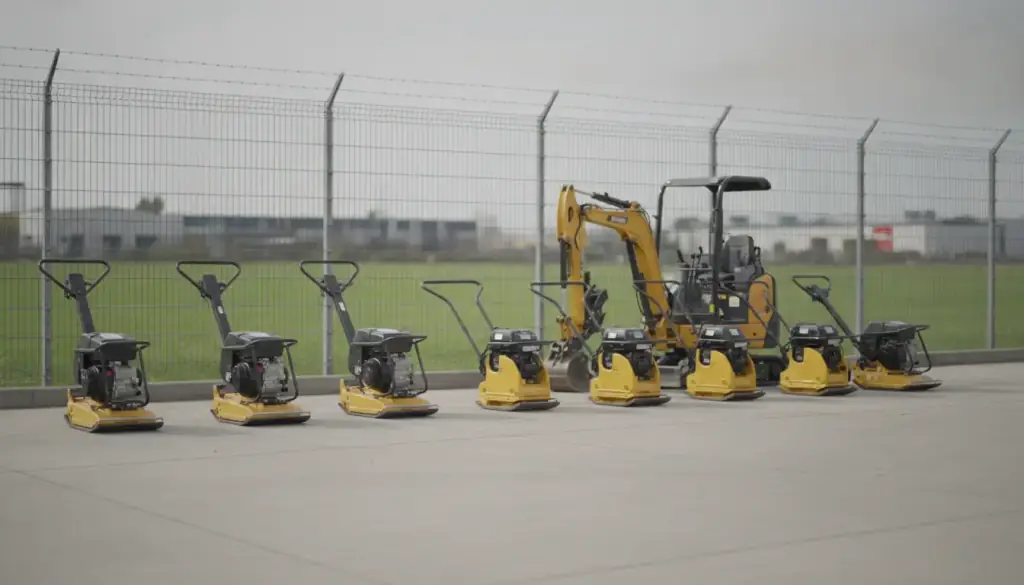
Every contractor eventually does the arithmetic on a machine they keep renting. It is a reasonable thing to work out, and the honest answer is that it depends less on the purchase price than on two things: how many days a year the machine actually runs, and who fixes it when it stops. We rent equipment and we repair equipment, which means we see both sides of that decision more often than most.
Count the days, not the jobs
A walk-behind power trowel is a good example. If you pour flatwork most weeks, a trowel earns its keep quickly and you want your own, set up the way your finishers like it. If you pour slabs a handful of times a year, the same machine spends most of its life in a container losing its edge, and you are maintaining a machine to be ready for a day you cannot predict.
Compaction splits the same way. A vibratory plate compactor is small, cheap to run and used constantly by anyone doing backfill or pavers, so it is often worth owning. A jumping jack rammer is more specialised, harder on itself, and rented far more sensibly. A 1000 pound hydraulic drop hammer is not a machine anyone buys for one demolition.
Earthmoving is usually a rental question
Mini excavators, trenchers and skid steers are where the arithmetic turns hardest against ownership for a small crew. The purchase is only the start: you need a trailer rated to move it, somewhere to keep it, and a plan for the hydraulics when they let go. Renting means the machine arrives serviced, and when a trencher chain wears out it is our problem and not your Tuesday.
- Mini excavators: Yanmar and Komatsu, 12, 16 and 24 inch buckets, 8 foot digging depth
- Ditch Witch 3500 ride on trencher: 54 inch bar, 6 to 12 inch width, 63 inch depth
- Ditch Witch 1820 walk behind trencher: 36 inch bar, 4 to 6 inch width, 30 inch depth
- Bobcat S175 skid steer loaders: 66 inch bucket, tooth or smooth
- Earth augers: one man, gas powered, up to 12 inch diameter
Match the machine to the pour, not to the budget
On concrete, the size of the job should pick the machine. Manual push Georgia buggies at 9 cubic feet suit a modest pour with a short run. A powered ride on buggy at 16 cubic feet changes what a two man crew can move on a long run and pays for itself in a morning. Walk-behind trowels at 36 and 46 inch handle most slabs, and an 8 foot riding trowel is for the days where floor area is the whole problem. A Vibra Strike 12 foot power screed is the same logic applied to striking off.
Sawing works the same way. A 14 inch cut off saw, gas or electric, covers most of what comes up. A 20 horsepower concrete saw on an 18 inch blade is a different class of tool, and a Soff-cut saw exists for early entry cutting where the timing of the cut matters more than the depth.
The part people forget: power and light
Plenty of jobs stall not because the machine is missing but because there is nothing to run it on. Honda and DeWalt generators from 5000 to 6500 watt cover most site needs. If the work runs past daylight, 4000 watt portable light towers change what a crew can finish in a day, and a 2000 watt metal halide or a 500 to 1000 watt halogen handles smaller areas. Two inch gas centrifugal and submersible electric pumps are what keep a dewatering problem from becoming a lost day.
Who fixes it matters
The part of the rent or buy question that gets skipped is service. A machine you own is a machine you maintain, and the day it stops is a day your crew stops with it. Our rental fleet comes back to a bench in the same building, which is why a rented unit arrives serviced and why we can take on repair work for machines we never rented out.
Ask before you haul
Call the counter and tell us the job before you book a machine. Sometimes the right answer is a smaller unit than you had in mind, and occasionally it is that you should buy the thing rather than rent it a seventh time. The rental yard is signed as Builders Rental Co. on the same pylon at 20 NE 30th Street, and the machines come back to our own bench, which is why we can tell you honestly what condition a unit is in.
Contractors Supply Co, (405) 525-7431
Call (405) 525-7431More articles
Rebar supports: getting the steel to the right height, and keeping it there
The cheapest way to ruin a slab is to let the steel end up on the ground.
Weeps, flashing and mortar nets: why a masonry wall stays dry
A brick wall is not waterproof. It is designed to let water back out, and that only works if the detail is right.